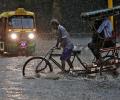
Though early days, meteorologists point towards a neutral La Nina during the initial phase of the four-month monsoon season this year that starts from June. If this holds true, by the time the rains hit the mainland, it could mean there would be one less reason to worry about the prospects of the monsoon this year. Weathermen said making any accurate prediction of how El Nino will behave and what impact it can have on the progress and distribution of rains is difficult to say at this point. A clear picture will emerge around late May or early June.

The Centre has, perhaps for the first time, decided to provide funding support to farmer-producer organisations, krishi vigyan kendras, custom hiring centres, and individuals for purchasing them.

The government's food subsidy in the ongoing fiscal year is expected to be a little less than Rs 4 trillion.
Among the key demands of agitating farmers has been a legal guarantee on minimum support price (MSP). The protest reached a crescendo when thousands of farmers from Punjab and elsewhere marched towards Delhi late last year and decided to block the main entry points once they were denied entry. The Centre, on its part, held 11 rounds of discussions with the protesters and even offered to amend some of the provisions without much success. With now one of their chief demands met, farmers have now moved on to force the government to concede on MSP.
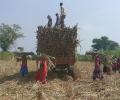
Nitin Tyagi is a young farmer in Budhagaon village of Baghpat district of Uttar Pradesh. A few years ago, Tyagi left his fairly lucrative job in the medical industry and shifted base to his ancestral village to look after his land and property. He opened a small shop selling farm inputs in the village and also started taking a greater interest in agricultural matters which had so far been looked after by his father and uncles. Tyagi and his brothers primarily grow sugarcane, potato and wheat on nearly 10 acres of land with sugarcane taking up most of his time and effort. Being one of the most important and lucrative cash crops of the region, sugarcane is directly linked to the fate of millions of farmers in west UP and with it, the electoral fortunes of political parties seeking their votes in the coming assembly polls.
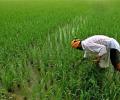
Gross value added in agriculture and allied activities clocked a healthy growth rate of 4.5 per cent at constant prices in the second quarter of FY22, up from 3 per cent during the same period last fiscal year and 3.5 per cent in Q2 of 2019-20. In the first quarter of FY22, gross value added in the sector was also 4.5 per cent. Growth in current prices was also a healthy 7.9 per cent in July-September 2021-22, up from 7.3 per cent in the same quarter last fiscal year. It was slightly less than the 8.7 per cent of the second quarter of 2019-20.

The Centre, after the repeal of the farm Acts, may bring in another important piece of legislation concerning farmers in the form of the long-pending Seeds Bill. This will be in the ogoing winter session of Parliament. Sources said the draft Seeds Bill, in the way it was prepared in 2019, sought to overcome several of the shortcomings of the Seeds Bill of 2004, which was proposed to replace the Seeds Act of 1966. However, the 2004 Bill could not be cleared owing to deficiencies in it.

'As far as contract farming is concerned, we already have a model Act and states will be encouraged to adopt them.'
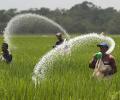
Enthused by rising potato prices after a prolonged slump, Pradeep Sharma was planning to sow the crop on his 15-acre farm near Agra slightly earlier than usual. The delayed departure of the southwest monsoon also prompted his decision, since the good soil moisture would have saved at least one initial irrigation. But the acute shortage of diammonium phosphate (DAP), a crucial nutrient ahead of the sowing season for potatoes, nipped those hopes in the bud. DAP is the second-most used fertiliser in the country after urea.
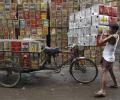
In order to check the abnormal surge in edible oil prices during Diwali festivities, as many as 18 states are in the process of imposing stock holding limits on oilseeds and edible oils after being empowered by the Centre for doing so. Of the 18 states that are in the process of imposing stock limit on my edible oils apart from UP, include Rajasthan, Gujarat, Maharashtra, Odisha, Kerala, Jharkhand, Chhattisgarh, Andhra Pradesh, Tamil Nadu, Tripura and the Union Territory of Chandigarh. Of the 18, Uttar Pradesh, has already imposed stock limits on edible oils, the Centre was informed with as many as 23 states to discuss ways and means to ensure further easing of edible oil prices.

Monsoon in August was almost 24 per cent below normal, which was the sixth driest August since 1901. It came on the back of a 7-per cent monsoon shortfall in July.

Several experts are of the view that inflationary pressure, including that in food items, may build from October with economic activity gathering steam. However, the price movement in three key items of tomato, onions and potatoes, commonly known as TOP, may give some solace in the months to come. Traders and market watchers said the price movement in all the three will remain within the band sans any unusual spikes.
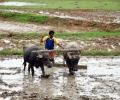
IMD has decided to increasingly use cutting-edge technology such as artificial intelligence (AI) and machine learning (ML) in forecasting, both to avoid such glitches and to counter the disruption of normal seasonal patterns as a result of climate change. It has formed various internal sub-groups of senior officials and meteorologists to decide on how best to use AI and ML in predicting cyclone intensity, and in making short-range weather forecasts (those valid for up to three hours) as well as long-range forecasts.
According to latest data, crops have been sown in around 72.13 million hectares, which is 8.90 per cent less than the same period last year.

The death of a 11-year-old boy due to 'bird-flu', even before the devastating effects of the second Covid wave have waned, has alarmed the medical fraternity though they assert that human-to-human transmission of H5N1 virus is extremely rare. The event has also put the Rs 90,000 crore domestic poultry industry which was seeing some uptick in demand after months of low sales last year into a spot of bother, as any curb on sale or production of eggs or chicken could have a devastating impact on its revenues. It is estimated that around 60 million people are directly impacted by the poultry sector in India. H5N1 virus, also commonly known as bird flu, is known to spread from chickens but other birds such as ducks and crow are also carriers of the virus.
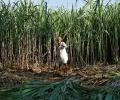
Sugarcane dues accruing to farmers rose to almost Rs 21,321 crore as of May 2021. Of that Rs 18,820 crore is for the cane supplied in the current season, which will end in September, while the remaining Rs 2,501 crore is from previous years. Of the pending sugarcane dues of 2020-21, almost 63 per cent accrues to the poll-bound state of Uttar Pradesh. The remaining are from Maharashtra and others.

New ministry will bring much-needed transparency in the functioning of the cooperatives, which so far have been riddled with allegations of political interference and mismanagement.
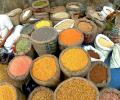
On a day when several mandis across the country are closed in protest against the recent Centre's decision to impose stringent stock-holding limit on pulses, the government clarified that limits have been defined as retail prices are still higher than last year though there is some moderation in the last few weeks. It said the same logic also holds true for edible oils, the import duties on which was slashed few days back and curbs lifted on import of refined oils. The decision on edible oil and pulses have caused massive resentment among the trading community as it came just ahead of the kharif sowing season, when prices were off their peaks due to multiple steps announced previously. Sources said trading activity in some of the major mandis dealing in pulses such as Sholapur, Amravati and Latur in Maharashtra, Indore and Dewas in Madhya Pradesh along with Kanpur in Uttar Pradesh was impacted as traders went on a flash strike in protest against the decision to impose stock limits.
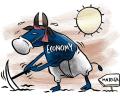
For the second month running, the demand for work under the flagship MGNREGA scheme has been lower than in 2020, which was an extraordinary year for the scheme. Latest data shows that around 35.1 million households have sought work under MGNREGA this June, or 21.48 per cent lower than the number that had sought work in the same month of 2020. This May, some 27.6 million households had sought work under the scheme, or 26.01 per cent lower than the same month last year.

With rainfall and monsoons becoming highly unpredictable partly due to climate change and partly due to usual changes in weather patterns, it is such innovations by IMD which will help in planning better, reports Sanjeeb Mukherjee.
